Homeowners in Edinburgh with terrazzo flooring often encounter two primary challenges: managing a dull and worn floor and the concern about potentially damaging the floor through incorrect restoration methods. While techniques such as grinding and polishing can effectively rejuvenate the flooring, there is a risk that these processes might reveal underlying problems that a basic maintenance routine could have temporarily obscured. It is essential to carefully consider the possible advantages of restoration against the likelihood of uncovering hidden issues, thereby ensuring that any work undertaken enhances the floor's original allure while preserving its structural integrity.
In homes that cherish their heritage, the aim should not merely be to achieve a specific aesthetic at any cost. Rather, it is crucial to concentrate on maintaining the unique character and integrity of the flooring. Each decision made during the restoration process must embrace heritage sensitivity, ensuring that the historical importance of the floor is upheld while concurrently enhancing its visual charm.
Essential Strategies for Successful Terrazzo Restoration
- Grinding revitalises a terrazzo floor by eliminating a worn top layer, rectifying uneven surfaces to achieve a smooth finish.
- Polishing improves the floor's appearance by enhancing clarity and shine, though it does not render the floor resistant to damage.
- Experts’ recommendations are based on the floor's condition rather than personal preferences, commencing with a thorough evaluation of what the floor can safely support.
- Some discolouration and visual inconsistencies may persist, particularly in older floors that have undergone previous repairs or display signs of wear.
- Achieving the most durable results relies on meticulous preparation, setting realistic expectations, and ongoing maintenance following the restoration.
Why Is Grinding and Polishing Important for Your Terrazzo Floor in Edinburgh?
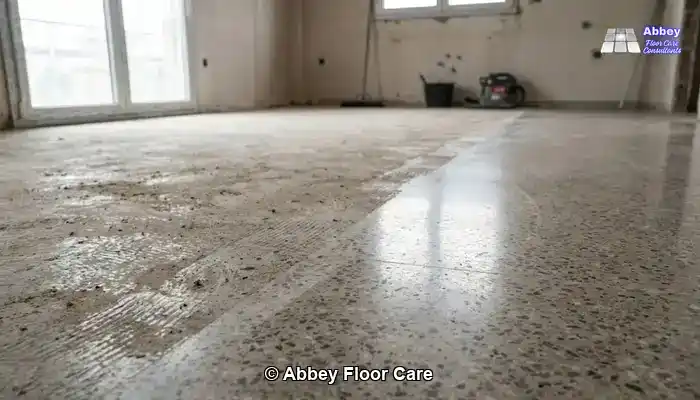
Although many individuals perceive grinding and polishing as interchangeable processes for “finishing” a floor, the reality is far more nuanced, especially when dealing with terrazzo. The surface may have aged, softened, and absorbed various contaminants over the years. Thus, the primary responsibility of a professional lies in evaluating the actual needs of the floor rather than relying on marketing claims, emphasising inspection-led decisions rather than assumptions to guide the restoration process.
This is why providing a thorough explanation before selecting any equipment or methods is crucial. The safest outcomes arise from aligning the restoration strategy with the floor's current condition rather than attempting to adjust the floor to fit predetermined methods while remaining vigilant about surface degradation.
For homeowners seeking clarity on whether grinding or polishing is the right approach for their floor, a professional terrazzo grinding and polishing assessment in Edinburgh offers insights grounded in the floor's condition prior to any irreversible procedures.
What Is Terrazzo, and How Does Its Surface Change Over Time?
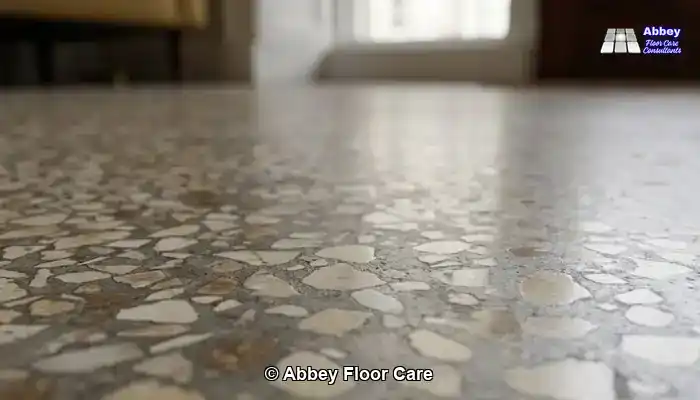
Domestic terrazzo primarily consists of a cement-based surface wherein marble chips are embedded within a Portland Cement Binder. Over time, as this binder ages, it tends to become more absorbent. In the context of homes in Edinburgh, this evolution is crucial because the floor's aesthetic appeal is often influenced more by what has seeped into the binder over time than by what remains on the surface. Therefore, a “dull” appearance may indicate wear of the cement binder rather than simply highlighting a cleaning issue.
Once contaminants infiltrate the binder, the floor can still appear grey even after thorough cleaning, as you are observing the internal state of the surface rather than just the outer layer. This elucidates why embedded soil can present a particularly challenging obstacle when attempting to restore the floor’s original beauty.
How Does Grinding Affect Terrazzo Floors?
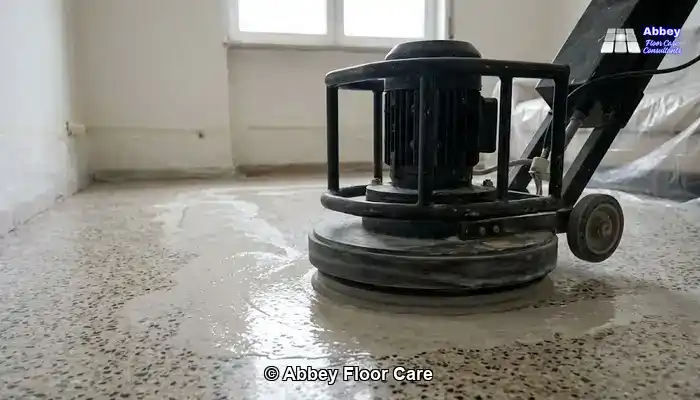
Mechanical grinding is a deliberate resurfacing technique aimed at removing a compromised top layer while also addressing lippage on uneven tile floors. In residences throughout Edinburgh, it is vital to recognise that grinding is not merely an “extra polishing” step; it is an intentional action that modifies the surface by removing material. As a result, a specialist will only recommend this method when it is deemed necessary and safe based on the floor’s condition, treating material removal as a significant and irreversible action.
As grinding reveals what the surface may have concealed, a restorer typically begins the process by stabilising cracks or old channels using resin repair filler to ensure that the floor can be refinished as a cohesive unit. This preliminary step is classified under structural repairs, which is essential for establishing a foundation for a successful restoration.
How Do Honing and Polishing Improve the Surface Finish?
After the grinding phase, the honing process refines the surface, while polishing serves as an optional finishing touch that enhances the sheen. In Edinburgh, the critical question for professionals is not simply “gloss or matte?” but rather which level of refinement best aligns with the floor’s actual condition and the homeowner’s aspirations. A higher sheen can create a striking visual effect, but it may also expose wear more rapidly, making the choice of finish a long-term commitment rather than a fleeting aesthetic decision.
Moreover, a specialist might apply a densifier to achieve higher polish levels when appropriate. However, the fundamental principle remains unchanged: the selected finish must correspond to the true condition of the surface, rather than conforming to unrealistic showroom standards, and it should consider long-term wear to ensure lasting satisfaction.
What Distinguishes Grinding from Polishing?
At first glance, grinding and polishing may appear similar, as both methods utilise diamond abrasives, but they serve distinct purposes and yield different results. In the realm of Edinburgh terrazzo, grinding is employed to rectify wear, contamination, and surface irregularities, whereas polishing is applied to enhance clarity once the surface is confirmed to be structurally sound. This distinction means that professionals will not regard these methods as interchangeable when lippage correction or deeper surface damage is present.
When a homeowner requests “just a polish,” a knowledgeable restorer will clarify that polishing cannot address deeper wear patterns or unevenness concealed beneath the surface. Instead, the best sequence of restoration is determined by inspection-led decisions rather than personal preferences.
What Limitations Should You Be Aware Of Regarding Grinding and Polishing?
Even the highest quality work has its limitations, and terrazzo does not shy away from revealing these constraints. The Portland Cement Binder may retain historical discolouration and older contaminants that might not entirely disappear, even after resurfacing. In Edinburgh, a prudent approach to setting expectations involves distinguishing between what can be improved and what may remain, as certain visual variations are simply consequences of age and surface degradation, rather than indicators of inadequate work.
It is equally crucial to recognise that a higher sheen does not inherently protect against future markings or chemical dulling. Polished surfaces may show traffic patterns sooner, which is why heritage sensitivity includes selecting a finish that aligns with practical usage rather than merely pursuing initial brilliance.
How Do Professionals Evaluate the Safe Tolerance for a Terrazzo Floor?
A professional evaluation concentrates on determining what the floor can safely endure, as the extent of resurfacing depends on numerous factors, including thickness, condition, and overall structural stability. In properties throughout Edinburgh, this assessment typically necessitates a careful analysis of cracks, previous repairs, and the underlying causes of movement. Consequently, the decision-making process prioritises structural repairs and stability over aesthetics.
The critical factor is that the safe depth for resurfacing cannot be established without examining the floor within its specific context. This is why a reputable restorer regards material removal as conditional rather than an automatic choice.
What Are the Key Long-Term Care Considerations After Restoration?
Once a terrazzo floor has been refinished, the focus shifts to maintaining its clarity over the long term by minimising absorption and limiting unnecessary wear. In homes throughout Edinburgh, an impregnating sealer is often applied to manage the absorbency of the Portland Cement Binder. However, it is vital to comprehend that, while this treatment facilitates easier cleaning, it does not render the surface invulnerable. Persistent challenges such as embedded soil and wear still depend on daily usage habits.
To ensure more stable, long-lasting results, it typically involves treating the floor as a finished surface that requires protection from harsh cleaning agents and avoidable abrasion. Additionally, the selection of finish should cater to the household's actual usage rather than idealised conditions.
When Is It Time to Seek a Professional Assessment for Your Terrazzo Floor?
If your terrazzo continues to appear grey after cleaning, if cracks are visible, or if you suspect unevenness, the most sensible course of action is to pursue a professional terrazzo assessment in Edinburgh. This assessment will clarify underlying issues and realistically outline achievable goals before any grinding or polishing work begins.
A skilled restorer will communicate potential trade-offs transparently, establish clear boundaries, and clarify what restoration work can and cannot accomplish, enabling you to move forward with realistic expectations for long-term wear.
Key Principles for Effective Terrazzo Restoration
Grinding and polishing should not be perceived as mere “options” on a checklist; they are specialised techniques employed in a specific sequence dictated by the floor’s current condition. The safest and most effective results arise from sound judgement, meticulous sequencing, and an honest acknowledgement of limitations, particularly in cases where the floor possesses age, history, and intrinsic value.
Engaging in a condition-led terrazzo assessment empowers homeowners to make informed decisions calmly, with the long-term well-being of the floor as the primary focus.
Meet the Expert Behind the Terrazzo Insights
David Allen is a seasoned expert in the restoration of natural stone and tile, boasting over 30 years of hands-on experience in restoring floors in homes throughout the UK. His expertise encompasses terrazzo and a wide variety of stone and tile surfaces, with a focus on precise mechanical refinishing, repair-driven restoration, and offering practical advice to help homeowners sustainably maintain their floors over time.
The article Understanding the Impact of Grinding and Polishing Terrazzo in Edinburgh Homes was originally published on https://www.abbeyfloorcare.co.uk
The Article Grinding and Polishing Terrazzo: Enhancing Edinburgh Homes first appeared on https://fabritec.org
The Article Grinding and Polishing Terrazzo for Edinburgh Homes Was Found On https://limitsofstrategy.com