Explore the Consequences of Lightning Strikes on Trees
Approximately six months ago, a dramatic incident unfolded when lightning struck a remarkable Spotted Gum (Corymbia maculata) situated in Adamstown Heights. Following this noteworthy event, the customer promptly reached out to Waratah Professional Tree Care. Our highly skilled senior arborist, Steve, swiftly arrived on-site to conduct a comprehensive evaluation of the damage sustained. He executed a remedial pruning aimed at optimising the tree’s chances of recovery. The entry and exit wounds caused by the lightning strike were distinctly visible, while a neighbouring tree suffered severe damage, losing all its foliage due to the overwhelming force of the lightning strike.
The customer reported a significant decline in the tree’s health, prompting a request for Steve to return and reassess the tree’s potential for recovery after this traumatic incident. This ongoing concern underlines the critical importance of professional evaluation in managing tree health following such distressing events.
-
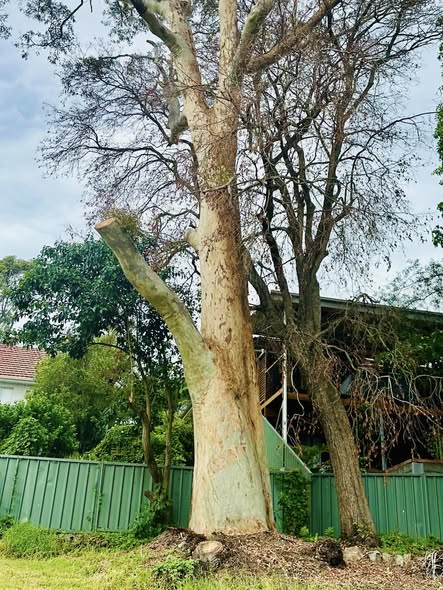 The Spotted Gum in Adamstown Heights immediately after the lightning strike, showcasing fresh and clearly visible trunk damage. The neighbouring tree behind it has also been stripped bare by the force of the strike.
 -
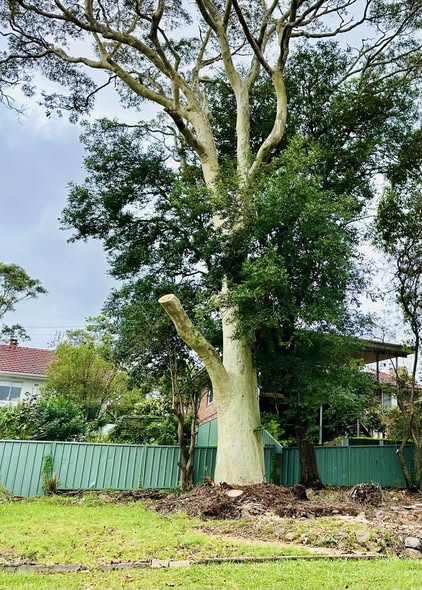 Steve’s follow-up visit six months later revealed that the Spotted Gum remains bare and in evident decline despite the remedial prune, while the leafy canopy visible belongs to the neighbouring tree, which has fully recovered.
What Are the Consequences of Lightning Strikes on Trees?
The charred electrical patterns, frequently referred to as Lichtenberg figures, were prominently visible on the bark of the trunk, clearly marking the path of the lightning strike. Both the entry wound, where the lightning forcefully struck, and the exit wound, where it earthed, were apparent and unmistakable, indicating the severity of the incident.
Lightning does not merely scorch the outer bark of a tree; the internal damage it inflicts can be significantly more severe and far-reaching, severely impacting the tree’s overall health and structural integrity. This internal damage can lead to complications that may not surface immediately but can ultimately jeopardise the tree’s stability.
When a bolt of lightning strikes a tree, the tremendous electrical charge travels through the tree, seeking the path of least resistance to the ground, usually through the water-conducting tissue located just beneath the bark. The heat produced is extreme and instantaneous, effectively boiling the sap within the cambium layer, which is the thin band of living cells responsible for the tree’s growth and the transport of essential nutrients and water throughout the tree. This process can severely disrupt the tree’s vitality.
Once the cambium layer is compromised, the tree loses its ability to transport sugars from the leaves down to the roots and water from the roots to the leafy canopy. The affected cells perish, growth halts, and overall vitality diminishes, critically undermining the structural integrity of the tree, making it susceptible to further complications.
The tree does not die immediately following the strike, which is why the decline may take weeks or even months to manifest visibly. The particular Spotted Gum displays some regrowth, suggesting that it is still fighting to survive despite the challenges it faces. However, the overall prognosis remains uncertain and cautious, emphasising the importance of ongoing monitoring and care from professionals.
What Are the Future Prospects for This Tree?
The extent of damage the tree sustained heavily relies on how much of the cambium layer was destroyed and whether the root system also suffered from the earthing strike. Understanding these factors is crucial for determining the tree’s future and potential recovery.
Steve’s assessment revealed several urgent priorities that must be addressed to ensure the tree’s safety and health:
- Immediate safety measures: It is vital to monitor the structural integrity of the tree closely. A tree that has been struck by lightning may appear stable while being severely weakened internally. Any substantial deadwood present in the canopy poses a falling hazard and requires prompt attention to ensure safety for surrounding individuals and property.
- Vigilance for secondary infections: The wounds created by a lightning strike can serve as entry points for fungal diseases and wood-boring insects. A compromised tree is a vulnerable tree that necessitates close observation and care to prevent further damage and to promote healing.
- Regular evaluations: The amount of regrowth observed in the coming months will provide valuable insights into the tree’s long-term prognosis. If the regrowth is robust and continues, there is hope for recovery. Conversely, if it stalls or diminishes, removal may ultimately be the safest option to mitigate further risk to surrounding structures and individuals.
Should You Be Alarmed About Lightning Strikes Affecting Your Trees?
While lightning strikes are relatively rare occurrences, they are not as infrequent as many believe. Tall, isolated trees and those located near water are statistically at a higher risk of being struck. Spotted Gums, like many eucalyptus species, are particularly conductive due to their moisture content and height, making them more susceptible to lightning strikes and related damage.
If you notice a sudden or unexplained decline in a tree, especially following a storm, it is prudent to have an arborist evaluate it sooner rather than later. Early intervention offers the tree the best chance for recovery and protects you from the dangers associated with a compromised tree that goes undetected, ensuring safety for your property and the surrounding environment.
In-Depth Analysis of the Case Study
This assessment was conducted by Steve Brown, senior arborist at Waratah Professional Tree Care. Waratah has been providing arborist services across Newcastle and the Hunter Region since 1998. We proudly hold ISO 9001, ISO 14001, and ISO 45001 certifications through Global Compliance Certification, showcasing our commitment to quality and environmentally responsible practices.
Frequently Asked Questions Regarding Lightning Strikes on Trees
Can a tree recover after being struck by lightning?
Yes, some trees can recover from lightning strikes, particularly if the impact was a glancing blow and the damage to the cambium is limited to one side of the trunk. The potential for recovery hinges on the species, the tree’s overall health prior to the strike, and the extent of damage to the conducting tissue. An evaluation by an arborist is essential for determining the prognosis and necessary interventions to aid recovery.
How can I identify if my tree has been struck by lightning?
Look for signs such as bark that has been blown off or scorched in a spiral or vertical pattern down the trunk, entry and exit wounds, sudden dieback of the canopy in the weeks following a storm, and in some cases, split wood or shattered branches. The presence of Lichtenberg figure burn patterns on the bark is a definitive indicator of lightning damage and requires immediate attention.
Is a tree that has been struck by lightning dangerous?
Yes, it can be. A tree that has sustained significant internal damage from a lightning strike may fail structurally without showing obvious external signs of distress. If you suspect lightning damage, it is crucial to have the tree assessed by a qualified arborist without delay to ensure safety for people and property, as the risks associated with a compromised tree can be severe.
What actions should I take if I suspect my tree has been struck by lightning?
Ensure that people and pets are kept away from the affected tree until it has been evaluated by a professional. Contact a qualified arborist as soon as possible for a professional assessment. Avoid attempting to assess the structural damage yourself, as internal damage may not always be visible from the outside, and professional expertise is essential in these situations to determine the best course of action.
If you have a tree that you are concerned about following storm damage or a lightning strike, Waratah Professional Tree Care provides onsite assessments across Newcastle and the Hunter Region starting from $110.
Contact us at (02) 4956 6602 for expert assistance and peace of mind.
Case Study: When Lightning Strikes A Spotted Gum Tree in Adamstown Heights
The Article: Case Study: When Lightning Strikes A Spotted Gum Tree in Adamstown Heights first appeared on https://writebuff.com
The Article Lightning Strikes a Spotted Gum Tree in Adamstown Heights: A Case Study Was Found On https://limitsofstrategy.com
The Article Spotted Gum Tree Struck by Lightning in Adamstown Heights found first on https://electroquench.com